

kids, parents, baby & kids
Change of teeth in children
.

Have an account? Log in to check out faster.

Kids Toothpaste
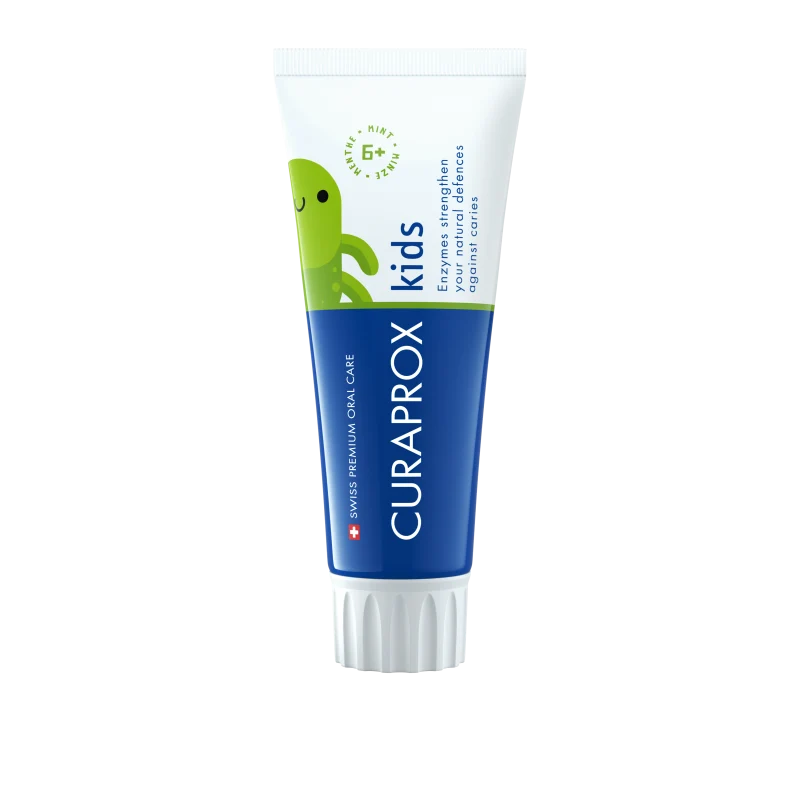
Curaprox Kids toothpastes make daily brushing approachable with mild formulas and child-friendly flavours. The family includes options for different ages and fluoride preferences, allowing parents to select an appropriate toothpaste for the child's stage and follow guidance from their dental professional.
Fluoridated variants use age-appropriate concentrations to support enamel and everyday cavity protection, while a fluoride-free option is also available when specifically preferred or recommended. Natural enzymes support the protective role of saliva, and the formulas contain no sodium lauryl sulphate, triclosan or microplastics. Flavours and fluoride levels vary across the range, so customers should follow the age information and usage directions on the selected product.
When should I start brushing my baby’s teeth?
As soon as baby’s first tooth erupts, it’s time to start brushing. Milk or baby teeth play an important role when it comes to eating, chewing, and speaking. Therefore, tiny choppers need a lot of care. Choose a super-gentle toothbrush for baby’s first toothbrush, as babies don’t like hard bristles that stress or hurt the sensitive gums. A rice grain-sized amount of a children’s toothpaste with an age-appropriated fluoride level is enough. Brush with small circles and clean the tiny teeth thoroughly and cautiously, without any pressure. Firstly, brush the inner side, then the outer side, and eventually the chewing surfaces. The earlier you start brushing, the more natural this process will become for your child.
Fluoride or no fluoride – what's the right choice?
The ingredient may be controversial for some people, but its effectiveness is undeniable. That’s why we say: go for a toothpaste that contains fluoride. This trace element has proven its worth in preventing cavities. It makes your teeth more resistant to acid attacks and prevents the proliferation of plaque bacteria.
How much fluoride?
In general, you find the fluoride content indicated in ppm (parts per million) on every toothpaste packaging. For adults, dental professionals suggest a toothpaste containing at least 1.000 ppm of fluoride. For younger children, it's best to opt for a children's toothpaste. All our toothpastes contain an age-appropriate amount of fluoride, with two exceptions: Enzycal zero and one of the kids' toothpastes.
Do I even need toothpaste at all?
Brushing our teeth with toothpaste has become a mundane part of our life for most of us. But toothpaste is, indeed, an additive rather than an unavoidable step in our daily oral hygiene routine. But there are certain situations when using toothpaste can be very helpful. Our toothpastes contain vital ingredients called fluoride, enzymes, and valuable herbal ingredients that strengthen your tooth enamel, remineralise the teeth, boost the natural power of saliva, prevent cavities, and—depending on the type of toothpaste—can also assist in removing extrinsic teeth stains.
For 100% oral health
Recently viewed
When should I start brushing my baby’s teeth?
As soon as baby’s first tooth erupts, it’s time to start brushing. Milk or baby teeth play an important role when it comes to eating, chewing, and speaking. Therefore, tiny choppers need a lot of care. Choose a super-gentle toothbrush for baby’s first toothbrush, as babies don’t like hard bristles that stress or hurt the sensitive gums. A rice grain-sized amount of a children’s toothpaste with an age-appropriated fluoride level is enough. Brush with small circles and clean the tiny teeth thoroughly and cautiously, without any pressure. Firstly, brush the inner side, then the outer side, and eventually the chewing surfaces. The earlier you start brushing, the more natural this process will become for your child.
Fluoride or no fluoride – what's the right choice?
The ingredient may be controversial for some people, but its effectiveness is undeniable. That’s why we say: go for a toothpaste that contains fluoride. This trace element has proven its worth in preventing cavities. It makes your teeth more resistant to acid attacks and prevents the proliferation of plaque bacteria.
How much fluoride?
In general, you find the fluoride content indicated in ppm (parts per million) on every toothpaste packaging. For adults, dental professionals suggest a toothpaste containing at least 1.000 ppm of fluoride. For younger children, it's best to opt for a children's toothpaste. All our toothpastes contain an age-appropriate amount of fluoride, with two exceptions: Enzycal zero and one of the kids' toothpastes.
Do I even need toothpaste at all?
Brushing our teeth with toothpaste has become a mundane part of our life for most of us. But toothpaste is, indeed, an additive rather than an unavoidable step in our daily oral hygiene routine. But there are certain situations when using toothpaste can be very helpful. Our toothpastes contain vital ingredients called fluoride, enzymes, and valuable herbal ingredients that strengthen your tooth enamel, remineralise the teeth, boost the natural power of saliva, prevent cavities, and—depending on the type of toothpaste—can also assist in removing extrinsic teeth stains.
What flavours are available for kids?
Our toothpastes are made with only the good stuff such as enzymes, fluoride—one exception—, and Xylitol. They surely do not contain SLS, triclosan, and microplastics. We developed exciting flavours that are fun and make toothbrushing a pleasant experience. Let your child choose between fruity strawberry, juicy watermelon, or sweet mint.
Explore
kids, parents, baby & kids
.
babies, parents, baby & kids
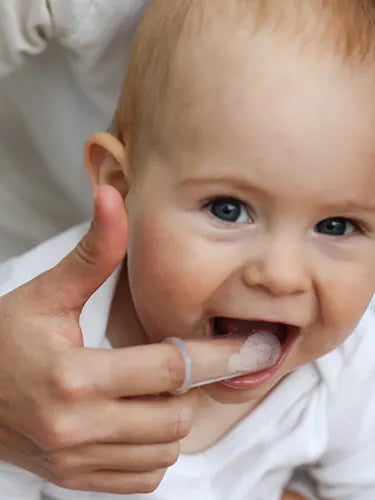
When a baby is teething, it's a reason to be happy: after all, the baby's smile looks twice as sweet with the first teeth. However, teething can be quite painful for the baby - and can also put a strain on the parents' nerves.
In this article, you will learn everything you need to know about the topic: When do babies teethe? What symptoms can you expect when teething? What to do with fever and diarrhoea? And above all: What helps with teething?
parents, baby & kids, prevention
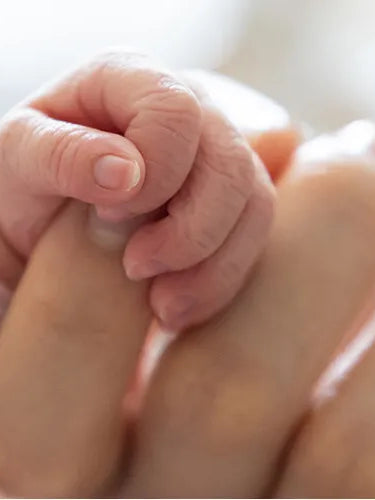
If a baby is born before the 37th week of pregnancy, it is referred to as a premature birth.
Why does this happen? What consequences can a premature birth have? What are the signs of an imminent premature birth? And are there ways to prevent it? In this article you will find everything you need to know about premature birth.