8 Products
Skip to results list

Active filters:

8 items
Column grid
Column grid

Filter

Active filters:

  • CS 5460 Ortho Ultra Soft

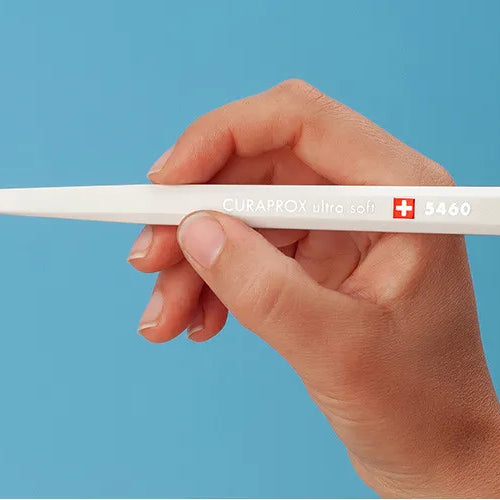
    CS 5460 Ortho Ultra Soft

    CS 5460 Ortho Ultra Soft

    Toothbrush

    Dhs. 34.65

    5/ 5 (6)
  • CS 1009 Single

    CS 1009 Single

    Routine

    CS 1009 Single

    Toothbrush

    Dhs. 29.40

    4.8/ 5 (12)
  • CS 1006 Single

    CS 1006 Single

    CS 1006 Single

    Toothbrush

    Dhs. 29.40

    5/ 5 (28)
  • CS Surgical Mega Soft

    CS Surgical Mega Soft

    CS Surgical Mega Soft

    Toothbrush

    Dhs. 34.65

    5/ 5 (2)
  • Implant Care Set

    Implant Care Set

    Implant Care Set

    Accessories

    Dhs. 208.95

    5/ 5 (1)
  • Ortho Kit

    Ortho Kit

    Ortho Kit

    Accessories

    Dhs. 119.70

    5/ 5 (1)
  • Hydrosonic Single Duo

    Hydrosonic Single Duo

    Hydrosonic Single Duo

    Toothbrush

    Dhs. 112.35

    4.9/ 5 (13)
  • Travel Set Ortho

    Travel Set Ortho

    Travel Set Ortho

    Toothbrush

    Dhs. 73.50

    4.8/ 5 (5)

Frequently asked questions

How do I clean around dental implants?

The best way to start good implant care is to treat your new tooth as one of your own natural teeth. Brush your teeth with an ultra-soft and dense toothbrush with a smaller head and don’t miss the interdental spaces. Clean all niches exceptionally well. Using interdental brushes is significantly more effective than flossing. As the spaces around the new addition can vary significantly—from smaller to larger than usual—opt for fitting interdentals to ensure both effectiveness and safety. We have a variety of brushes, one for every need. 

Not cleaning is not an option.
Clean the sensitive area between the implant neck and the gums with a specially designed toothbrush, particularly in case of fixed overdentures, or ball- and bar-retained overdentures. Yes, it can be difficult to reach. But not properly cleaning it is not an option as it can lead to serious implant issues like loss due to peri-implantitis–an infection that damages the gums and bone around the implant. That’s why we developed the fabulous flexible toothbrush CS 708 implant. It sports seven super gentle tufts on its small head and can reach every spot in the mouth. Here’s how to brush with it:

• Apply the head of the CS 708 implant to one side of the implant.
• Tilt it towards the gumline.
  Move the brush head with tiny up and down or circular movements gently focusing on the area between implant and gums.
• Guide the brush head closely along the implant neck from one side to the other, repeating two to three times.
• Repeat the same procedure at the back side of the implant.
 
You can also use an electric toothbrush, if you prefer. The Curaprox Hydrosonic pro was developed specifically for people with implants, braces, or gum issues. It hits the critical points around implants thanks to three different brush heads, super-fine bristles, and seven different cleaning levels.

We have also developed the CS 1009 brush for very special cases. Featuring longer bristles (9mm), this single-tufted brush is particularly suitable for cleaning partially erupted teeth, elongated teeth with periodontal pockets, back teeth furcations, special implant and prosthodontic cases. 

What kind of toothbrush should I use after oral surgery?

After surgery, you have to treat your mouth warily and may need a super gentle brush as the tissue in your mouth is highly sensitive. Even if you can't imagine being able to get a toothbrush to the injured area—with our incredibly soft CS surgical brush it is possible, and you can reliably remove bacteria and plaque from your mouth.

Bad breath – could it be your tongue?

Bad breath is a taboo subject–and an embarrassing condition. However, the problem is more widespread than you might think. It is usually caused by a build-up of bacteria, which thrive on remnants of food between the teeth, in the gum pockets, and on the tongue. Did you know that roughly 60 percent of the bacteria can be found on the tongue? So, when it comes to oral hygiene, do not neglect this part of your mouth. Thanks to our special tongue scrapers you can ensure that your tongue stays nice and clean. Gently scrape the surface of your tongue three to four times a day and feel wonderfully fresh.

Is brushing one tooth at a time really worth it?

Our answer is short and clear: yeah! It takes a little practice but is a really good way to bring your oral hygiene to a new level. Clean the gumline and the hard-to-reach surfaces behind the molars with the Solo Technique. And here's how it works: take the CS 1006 single—a one-tufted brush especially developed for tooth-by-tooth and gumline cleaning—and place the brush head on one side of the tooth. Then follow the tooth contour while making tiny, gentle, shaking or up-and-down movements along the gumline, as gentle as fluttering of butterfly wings, from one side of the tooth to the other and from one tooth to the next. Dental professionals say it’s the perfect way to clean the gumline and behind the molars. But not only: the CS 1006 single is also suitable for crowded as well as rotated teeth, irregular gingival margins, hard-to-reach wisdom teeth and areas around brackets, wires, retainers, crowns, bridges, chewing surfaces of erupting first and second molars in children and adolescents, and persons with a strong gag reflex. The CS 1006 single brush truly is a versatile instrument! Since you don't need toothpaste, you can use this brush dry, and the best place to do this is ANYWHERE—not only in the bathroom.

How do I use a single brush correctly?

A single brush is ideal for the precise cleaning of individual teeth, gumlines, implants and hard-to-reach areas. With small, gentle movements, even particularly challenging areas can be cleaned comfortably and precisely.

Which areas can a single brush clean especially well?

Single brushes are especially effective for cleaning along the gumline, behind the last molars, around implants, orthodontic brackets, and other hard-to-reach areas.

Should I use a single brush in addition to my regular toothbrush?

Yes. A single brush is the perfect addition to your everyday oral care routine and helps clean especially challenging areas with precision.

Good to know

One toothbrush fits all needs – really?!

You may think: «A regular toothbrush is enough—why use a specialised one?» We'll gladly tell you why.

Using a specialised toothbrush for braces, for example, that is suited to your specific oral care needs can remarkably improve the health of your mouth and make regular dental cleaning more effective.

Our different toothbrushes target different issues

Whether you are wearing braces, aligners, implants, or crowns, have very sensitive gums, teeth, or had to undergo surgery—choosing the right tool for the cleansing job is crucial and key to keeping your teeth thoroughly clean and healthy. If you’re unsure which toothbrush is best for your needs, or if you have questions about any of the options mentioned, don’t hesitate to reach out to us or your dental professional for advice.

How do I look after my braces?

Brushing teeth is an important part of our daily hygiene routine, especially when you wear fixed braces. Here’s our suggested routine for effective cleaning.

It’s a good idea to spend a little extra time on oral care, since regular brushing alone isn’t enough to prevent dental decay, inflammation, or unpleasant stains. But don’t worry—dental care with fixed braces is not rocket science. If you follow our guide, your teeth will remain wonderfully healthy and clean, even while you are wearing braces.

1. Rinse your mouth

Before brushing your teeth and braces, rinse your mouth thoroughly with water to remove larger pieces of food.

2. Brush the outer surface of every tooth
Clean each tooth at a time. For this step, the best tool is a special orthodontic toothbrush such as our CS 5460 ortho that comes with a smart groove in the middle of its gentle bristles to clean teeth, brackets, and wires. Brush with small circular movements and make sure the bristles are pointing at a 45-degree angle between the wire and tooth. By doing so you can reach the surface of the teeth underneath the wire.

3. Clean the inner and the chewing surfaces

Now brush the inner and the chewing surfaces of your teeth as you normally would.

4. Clean the wires, bands and brackets

You have probably already noticed that your braces are great at catching food and definitely need special attention and care. Clean these gaps with interdental brushes for ortho care such as the conic CPS 14 and the CPS 18. They are especially designed to keep the spaces around your braces clean and are therefore small and flexible enough to fit into the tiniest spaces under the wires.

5. Rinsing again
After you have brushed teeth and braces, rinse your mouth again with plenty of water. This should help get rid of any remaining bacteria. Use the Perio plus zero mouthwash or the great Aligner Foam to conclude your brushing routine and provide prolonged protection.

Taking your special care on the go

Keep your smile bright and stay confident thanks to a practical travel set designed especially for braces wearers. No compromise on oral health or on style—thanks to our ortho Travel Set.

The set contains all the practical and helpful ortho tools you need for a thorough clean when out and about. The colourful, super easy-to-carry set contains a special orthodontic travel toothbrush with a smart bracket groove in the middle of the dense filaments, a well-balanced enzymatic natural whitening toothpaste with valuable ingredients plus interdental brushes in different sizes, one of them cone-shaped to clean wires and around brackets. Meticulously developed and manufactured in Switzerland, this set comes with easily replaceable components.