


adults, product education, dental treatment
How Do I Look After My Dental Implants? The Ultimate Guide
Now we’ve made it easy for you to look after your dental implants… and enjoy the oral care you deserve.

Have an account? Log in to check out faster.
Can one brush size fit all my teeth?
Most people need more than one brush size as interdental spaces normally are not the same size. You may need two or three sizes to clean all your interdental spaces properly. As Curaprox provides the only calibrating system in the market, dental professionals can easily help you finding the proper size for every space. We offer interdental brushes in various sizes and dimensions that address every need and space. If you are unsure about the proper sizes, don’t hesitate to ask the dentist of your trust which brushes are best for cleaning between teeth. If you want to give interdentals a try by yourself, opt for the CPS prime Mixed Start Set which includes all sizes.
Which is better: Interdental brushes or floss?
You may wonder if floss or interdental brushes manage to clean your interdental spaces better. To effectively clean the spaces between your teeth, use interdental brushes as they have a major advantage over dental floss. Their flexible bristles span between teeth like an umbrella, fill the interdental space completely, and clean every nook and cranny. There is a size for every gap, even the narrowest. With a dental floss brush, on the other hand, you stretch the floss across these crevices, which means that it can therefore never clean as thoroughly as an interdental brush. However, dental floss is the clear winner when it comes to super-narrow spaces where interdental brushes can’t reach.
Do I need to use interdental brushes every day?
Yes, daily use of interdentals should be a normal part of your oral care routine. It is best to use them in the evening, before hitting bed. Thanks to a between teeth brush, you go to bed with completely clean teeth and bacteria have less chance of building up colonies overnight, secreting harmful acids, and damaging your teeth or causing gum inflammation. However, the optimal timing for interdental cleaning should be decided together with your dental professional, based on your oral condition and individual needs.
How do specialised interdentals differ from regular ones?
Regular interdentals are for cleaning «normal» interdental spaces. But when it comes to orthodontic appliances, implants, or dentures, your needs may change. Now, our special interdental brushes come into play. Brackets, bands, and wires require a different and even more accurate care than bracket-free teeth. Or you notice that, after the implant procedure, the spaces around your new tooth are larger than before and your well-known and proven interdentals won’t to the job anymore. No problem: we’ve got a proper interdental brush for every need. Our special interdental brush range of CPS ortho, CPS implant, and CPS perio come with longer, broader, or cone-shaped bristles that clean your mouth without any difficulty. Choose between different sizes in a practical colour system—easy to recognise and repurchase.
Can I damage my gums with these brushes?
No, if you use interdentals properly and in appropriate sizes, the use of specialised interdental brushes for braces, dentures, implants, or in case of enhanced interdental spaces is completely safe. There’s no risk of damaging your gums and teeth.
Can I replace the brush head instead of buying a new pack?
Yes, you can. All Curaprox interdental brushes come with a click system. When the head of the interdental brush looks worn or bend, you can comfortably replace it by clicking in a new one. The handle can be reused many times. We’ve got super-practical and eco-friendly refill packages for all Curaprox interdental brushes. Dental care can be so easy.
Which interdental brush size is right for me?
The right interdental brush glides gently between the teeth without pressure – and that’s exactly how it should feel. This helps remove plaque and bacteria thoroughly while staying gentle on your gums. If the brush is too small, it may not clean effectively enough. If it feels too tight or uncomfortable, it’s probably too large. With the right size, cleaning feels comfortable and effortless. Your dental professional will be happy to help you find the perfect CPS size for your smile.
How long can I use an interdental brush?
Fresh filaments help provide a pleasant and thorough clean every day. That’s why we recommend replacing your interdental brush regularly.
Why do my gums bleed when using interdental brushes?
Bleeding gums are often a sign of inflammation caused by plaque between the teeth. With regular and gentle cleaning, gums and interdental spaces usually become healthier within just a few days and bleeding often decreases. If your gums remain sensitive or continue to bleed, we recommend contacting your dental professional.
Should I use interdental brushes before or after brushing?
Whether before or after brushing, what matters most is using them every day. This helps keep interdental spaces pleasantly clean and your gums healthy.
Can interdental brushes clean safely around implants?
Yes. Curaprox interdental brushes clean thoroughly around implants while remaining especially gentle at the same time. The fine Curen® filaments are gentle on sensitive gums and implant surfaces.
Explore

adults, product education, dental treatment
Now we’ve made it easy for you to look after your dental implants… and enjoy the oral care you deserve.
adults, oral health, dental treatment
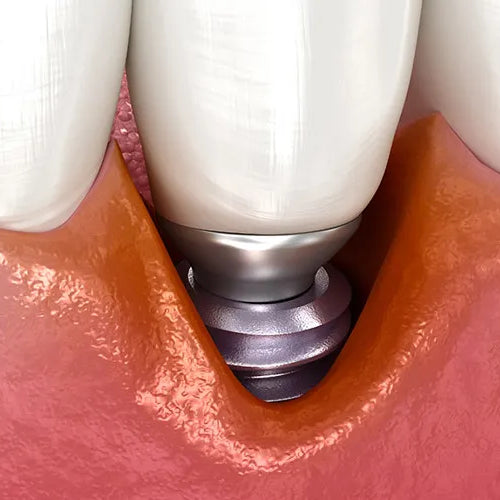
If the tissue around a dental implant becomes inflamed, this is known as peri-implantitis. This is caused by bacterial deposits (plaque) that have settled around the implant and can migrate from there into the deep tissue. Good oral hygiene and regular professional dental cleanings can prevent peri-implantitis. You can read here how to treat it if it has already got that far and why early detection plays an important role.

adults, kids, product education
Cleaning fixed braces is a challenge. Read here how to protect your teeth from dental decay – plus relevant care instructions.
Special interdental brushes are only for people with dental issues
Interdental brushes can prevent lots of problems and pain—especially when you wear braces or implants. But they are beneficial for everyone…
Your oral health is more important than you might realise, and it also includes your interdental spaces. There are numerous studies that show a direct link between dental decay, poor oral hygiene, and serious problems such as cardiovascular disease, respiratory issues, rheumatoid arthritis, high-risk pregnancy, and even certain cancers and dementia. How come? The inflammation and bacteria from gum disease can travel through your entire bloodstream and impact other parts of your body. Small brushes thus have a big impact.
Good oral care for everyone
That’s why we gladly provide people with appropriate products and the necessary know-how to give them the valuable opportunity to take control of their oral health and look after their mouth properly. We believe that prevention is always better than cure. And we know how valuable health is.
How to use interdental brushes with braces?
One of the biggest challenges associated with braces is cleaning. We know how easily food can get stuck between brackets and wires—leading to awkward moments and even making you want to hide your smile after meals.
Dental decay
But it's not just an issue of aesthetics. When you wear (fixed) braces, you have an increased chance of gum disease and dental decay. The many elements attached to the teeth make it difficult for saliva to rinse teeth as effectively as it should. If you don’t clean your teeth and braces regularly, bacteria can spread rapidly and seriously damage your teeth and oral health, especially the areas around glued-on brackets.
Clean regularly
Taking dental care with fixed braces seriously and cleaning your teeth and braces thoroughly every day helps you reduce the risk of decay and gum disease. The best way to clean your teeth with brackets:
• Rinse your mouth to remove any larger food particles.
• Brush with a manual toothbrush, ideally with the CS 5460 ortho, a special orthodontic brush that comes with a smart bracket groove in the middle of the bristles. Brush the outer sides, inner sides, and eventually the chewing surfaces. You can also opt for an electric toothbrush such as the Hydrosonic pro that cleans thoroughly and gently at the same time.
• Now it’s time for the interdentals.
Interdental brushes for cleaning wires, bands, and brackets
The braces’ components in your mouth are great at catching food, so you definitely need to pay special attention to them. Our cone-shaped interdental brush CPS 14 cleans orthodontic bands from inside and outside, as well as the areas between the wires and teeth around brackets. The CPS 18, however, is ideal for cleaning wires, simply by inserting it underneath. Give yourself enough time and look after your braces properly and rinse your mouth again afterwards. Now, you’re ready for whatever the day may bring.
A brush for every problem
Our interdental brushes are designed for cleaning brackets, bands, or small and bigger niches. They come in different sizes, with ultra-fine bristles, and a flexible core—pliable enough to fit into the tiniest or trickiest space. All these properties make our interdental brushes the perfect addition to traditional brushing when wearing orthodontic braces. Keep your teeth and wires perfectly clean and say goodbye to embarrassing moments with food stuck between your teeth.
How to use interdental brushes with implants?
Want to feel secure that you are doing everything possible for your dental implant to keep it healthy and safe—and also to avoid further implants? Make sure your daily hygiene routine includes proper brushing and the use of interdental brushes for implants.
To protect your new tooth and keep it for a lifetime, it’s essential to clean between your teeth—especially around the implant—every day. Neglecting this can lead to infection, gum recession, and even loss of the implant. And to be honest: nobody wants this.
Choose the right size
Ask your dental professional about the right interdental brushes—for example the CPS soft implant combined with another type of interdental brush—for your new tooth and your specific needs. Different teeth and interdental spaces may need different brush sizes. After the implant treatment, the spaces around your new implant can be larger than before. If a brush is too small for the space, it won’t clean effectively. If it’s too big, it won’t fit in and could hurt your gums or damage the implant.
When to use your interdental brush
You can clean between your teeth either before or after brushing with a manual or electric toothbrush—or separately from toothbrushing (in the morning, afternoon, or evening whenever you want, even out of the bathroom). Since everyone’s mouth is different, ask your dental professionalto help you plan a routine that’s best for you.
How to use it
Gently guide the interdental brush between your teeth and around the implant—never force it.
Small, gentle circular movements can help you find the entrance. Depending on the space, you may insert the brush straight or with a slight tilt toward the gumline—downward for lower teeth, upward for upper teeth—then straighten it to pass through. Clean with a single motion: once in, once out, once a day for each space. Do not twist or turn the brush while inside—this may cause injury.
After each use, rinse the brush under running water to remove plaque and bacteria, then let it air dry.
Replace when worn
Replace the brush every 1–2 weeks or when the bristles wear out. That is when the majority of the filaments are pointing downward, resembling pine tree branches. Did you know that practical and eco-friendly refill packages are available for all Curaprox interdental brushes? Just replace the worn head with a simple click and keep the handle.
Taking your special care on the go
When out of house or travelling, oral hygiene is sometimes put on the back burner.
But not with the practical Curaprox orthodontic Travel Set. It comes with a smart toothbrush, a caring toothpaste, and three different interdental brushes, one of them cone-shaped—the best care for challenging dental situations.
What may also help
When out of house or travelling, oral hygiene is sometimes put on the back burner. But not with the practical Curaprox orthodontic Travel Set. It comes with a smart toothbrush, a caring toothpaste, and three different interdental brushes, one of them cone-shaped—the best care for challenging dental situations.
Remember, you are also allowed to chew gum with fixed braces to stimulate the flow of saliva. However, it's important to choose a sugar-free gum that is soft and easy to chew, such as the Curaprox Black is white chewing gum, as hard or sticky gum can damage your braces or get stuck in them. Limit gum chewing to 10–15 minutes at a time to avoid unnecessary pressure that could break or loosen your braces.