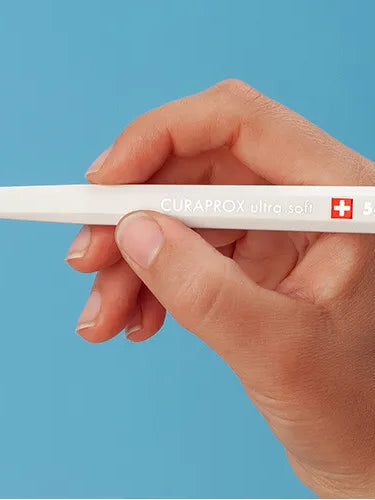
73349147_Packshot_Hydrosonic_Buerste_Single_front

Hydrosonic Single Duo

Dhs. 112.35
Sale price  Dhs. 112.35 Regular price 
Skip to product information
73349147_Packshot_Hydrosonic_Buerste_Single_front

Hydrosonic Single Duo

4.9 out of 5 (13 reviews)
Dhs. 112.35
Sale price  Dhs. 112.35 Regular price 
Single-tuft Hydrosonic brush heads clean individual teeth, gumlines, implants, and braces with precision.
  • Get it Thursday 27th August if you order within 13 hours
  • Free delivery on all orders

Description

The Hydrosonic Single brush head is designed for precise tooth-by-tooth and gumline cleaning. Its compact single tuft reaches areas that a standard brush head may miss, supporting controlled plaque removal around orthodontic appliances, implants and poorly positioned teeth.

Fine 0.088 mm Curen® filaments clean gently in narrow niches between teeth, brackets, arches and wires. CURACURVE® ergonomics provide the bend needed to guide the tuft accurately along the gingival margin and into hard-to-reach spaces. The head is also suitable for polishing individual tooth surfaces and supports the Solo Technique developed with oral health expert Jiří Sedelmayer. Made in Switzerland and compatible with every Curaprox Hydrosonic toothbrush, it should be replaced after no more than three months, or after six to eight weeks with braces.

  • Precise tooth-by-tooth cleaning
  • Fine 0.088 mm Curen® filaments
  • Cleans around brackets and wires
  • Suitable for implants
  • Supports the Solo Technique
  • Swiss Made quality
Specifications
Category
Toothbrush
Colour
White
Pack type
Duo Pack
Items per sales unit
2.0
Filament hardness
Super Soft
Exact colour name
White
Age group
Adult
Application
Gum Issues, Sensitive Teeth, Braces & Aligner Care, Daily care
Daily use
Yes
Handle material
Polypropylene
Filament material
Curen®
Toothbrush type
Refill Brush Head
Brush head cover
No
Number of brush heads
2
Compatible model
Pro, Easy, Black Is White
Shipping Information
Free shipping for all orders. Orders are generally shipped the same day.

Everything you need to know

Which brush head to choose?

We developed different electric toothbrush heads for our Hydrosonic toothbrushes and can proudly provide a suitable attachment for every need. Good to know: each brush head fits all Hydrosonic devices. The sensitive brush head cleans super gently and thoroughly without any pressure, even in case of sensitive gums, an ongoing inflammation (gingivitis), or brackets. The power brush head cleans powerfully and thoroughly—nomen est omen. It is recommended for a deep clean of healthy gums when stubborn plaque is present and you are prone to tooth staining. The single attachment is a single tuft brush and therefore ideal for cleaning around brackets and implants plus precise tooth-by-tooth cleaning. If you’re more into black, go for the elegant carbon brush head. It pairs perfectly with the Black is White Hydrosonic and sports charcoal infused bristles slightly helping bring out the natural brightness of your teeth and avoid stains.

How do I clean around dental implants?

The best way to start good implant care is to treat your new tooth as one of your own natural teeth. Brush your teeth with an ultra-soft and dense toothbrush with a smaller head and don’t miss the interdental spaces. Clean all niches exceptionally well. Using interdental brushes is significantly more effective than flossing. As the spaces around the new addition can vary significantly—from smaller to larger than usual—opt for fitting interdentals to ensure both effectiveness and safety. We have a variety of brushes, one for every need. 

Not cleaning is not an option.
Clean the sensitive area between the implant neck and the gums with a specially designed toothbrush, particularly in case of fixed overdentures, or ball- and bar-retained overdentures. Yes, it can be difficult to reach. But not properly cleaning it is not an option as it can lead to serious implant issues like loss due to peri-implantitis–an infection that damages the gums and bone around the implant. That’s why we developed the fabulous flexible toothbrush CS 708 implant. It sports seven super gentle tufts on its small head and can reach every spot in the mouth. Here’s how to brush with it:

• Apply the head of the CS 708 implant to one side of the implant.
• Tilt it towards the gumline.
  Move the brush head with tiny up and down or circular movements gently focusing on the area between implant and gums.
• Guide the brush head closely along the implant neck from one side to the other, repeating two to three times.
• Repeat the same procedure at the back side of the implant.
 
You can also use an electric toothbrush, if you prefer. The Curaprox Hydrosonic pro was developed specifically for people with implants, braces, or gum issues. It hits the critical points around implants thanks to three different brush heads, super-fine bristles, and seven different cleaning levels.

We have also developed the CS 1009 brush for very special cases. Featuring longer bristles (9mm), this single-tufted brush is particularly suitable for cleaning partially erupted teeth, elongated teeth with periodontal pockets, back teeth furcations, special implant and prosthodontic cases. 

How often to change the electric toothbrush head?

If you brush your teeth regularly twice a day, replace the electric toothbrush head every 2–3 months. Well, this is only a rough guideline. If you were ill or if the brush head shows signs of wear before then, replace it. Change it after 3 months at the latest, no matter how good it still looks. Why? Using a worn toothbrush increases the risk of not brushing properly. This may result in plaque residue on your teeth and eventually in tooth decay. If you wear brackets: replace the brush head every 6–8 weeks to achieve optimal results, as the bristles can wear out more quickly due to the brackets and wires.

See all questions

Customer reviews

4.9 Based on 13 reviews
5 stars 0
4 stars 0
3 stars 0
2 stars 0
1 star 0

For 100% oral health

Recently viewed

Frequently asked questions

Which brush head to choose?

We developed different electric toothbrush heads for our Hydrosonic toothbrushes and can proudly provide a suitable attachment for every need. Good to know: each brush head fits all Hydrosonic devices. The sensitive brush head cleans super gently and thoroughly without any pressure, even in case of sensitive gums, an ongoing inflammation (gingivitis), or brackets. The power brush head cleans powerfully and thoroughly—nomen est omen. It is recommended for a deep clean of healthy gums when stubborn plaque is present and you are prone to tooth staining. The single attachment is a single tuft brush and therefore ideal for cleaning around brackets and implants plus precise tooth-by-tooth cleaning. If you’re more into black, go for the elegant carbon brush head. It pairs perfectly with the Black is White Hydrosonic and sports charcoal infused bristles slightly helping bring out the natural brightness of your teeth and avoid stains.

How do I clean around dental implants?

The best way to start good implant care is to treat your new tooth as one of your own natural teeth. Brush your teeth with an ultra-soft and dense toothbrush with a smaller head and don’t miss the interdental spaces. Clean all niches exceptionally well. Using interdental brushes is significantly more effective than flossing. As the spaces around the new addition can vary significantly—from smaller to larger than usual—opt for fitting interdentals to ensure both effectiveness and safety. We have a variety of brushes, one for every need. 

Not cleaning is not an option.
Clean the sensitive area between the implant neck and the gums with a specially designed toothbrush, particularly in case of fixed overdentures, or ball- and bar-retained overdentures. Yes, it can be difficult to reach. But not properly cleaning it is not an option as it can lead to serious implant issues like loss due to peri-implantitis–an infection that damages the gums and bone around the implant. That’s why we developed the fabulous flexible toothbrush CS 708 implant. It sports seven super gentle tufts on its small head and can reach every spot in the mouth. Here’s how to brush with it:

• Apply the head of the CS 708 implant to one side of the implant.
• Tilt it towards the gumline.
  Move the brush head with tiny up and down or circular movements gently focusing on the area between implant and gums.
• Guide the brush head closely along the implant neck from one side to the other, repeating two to three times.
• Repeat the same procedure at the back side of the implant.
 
You can also use an electric toothbrush, if you prefer. The Curaprox Hydrosonic pro was developed specifically for people with implants, braces, or gum issues. It hits the critical points around implants thanks to three different brush heads, super-fine bristles, and seven different cleaning levels.

We have also developed the CS 1009 brush for very special cases. Featuring longer bristles (9mm), this single-tufted brush is particularly suitable for cleaning partially erupted teeth, elongated teeth with periodontal pockets, back teeth furcations, special implant and prosthodontic cases. 

How often to change the electric toothbrush head?

If you brush your teeth regularly twice a day, replace the electric toothbrush head every 2–3 months. Well, this is only a rough guideline. If you were ill or if the brush head shows signs of wear before then, replace it. Change it after 3 months at the latest, no matter how good it still looks. Why? Using a worn toothbrush increases the risk of not brushing properly. This may result in plaque residue on your teeth and eventually in tooth decay. If you wear brackets: replace the brush head every 6–8 weeks to achieve optimal results, as the bristles can wear out more quickly due to the brackets and wires.

What kind of toothbrush should I use after oral surgery?

After surgery, you have to treat your mouth warily and may need a super gentle brush as the tissue in your mouth is highly sensitive. Even if you can't imagine being able to get a toothbrush to the injured area—with our incredibly soft CS surgical brush it is possible, and you can reliably remove bacteria and plaque from your mouth.

Electric vs. manual toothbrush?

If you wonder whether a manual or an electric toothbrush is better: both are effective and allow a thorough clean when used properly. If you use an ultra-soft manual toothbrush correctly and combine it with interdentals, its cleaning efficacy is on a par with an electric model. However, electric toothbrushes are a good option for people with brackets, implants, or sensitive teeth and periodontitis. They offer a lot of comfort by eliminating the need for manual brushing and being gentle on both your teeth and gums—but they are not the time-savers some people hope for. It is still crucial to brush your teeth for a certain amount of time. Ideally, two to three minutes. 

Bad breath – could it be your tongue?

Bad breath is a taboo subject–and an embarrassing condition. However, the problem is more widespread than you might think. It is usually caused by a build-up of bacteria, which thrive on remnants of food between the teeth, in the gum pockets, and on the tongue. Did you know that roughly 60 percent of the bacteria can be found on the tongue? So, when it comes to oral hygiene, do not neglect this part of your mouth. Thanks to our special tongue scrapers you can ensure that your tongue stays nice and clean. Gently scrape the surface of your tongue three to four times a day and feel wonderfully fresh.

How long lasts its battery?

The Hydrosonic is a rechargeable electric toothbrush. A fully charged Curaprox Hydrosonic toothbrush battery lasts for 60 minutes of brushing—roughly equivalent to two weeks of use when you brush for 4 minutes per day. Good to know: the toothbrush maintains full power until the battery is empty. All Hydrosonic toothbrushes are rechargeable via USB.

Is brushing one tooth at a time really worth it?

Our answer is short and clear: yeah! It takes a little practice but is a really good way to bring your oral hygiene to a new level. Clean the gumline and the hard-to-reach surfaces behind the molars with the Solo Technique. And here's how it works: take the CS 1006 single—a one-tufted brush especially developed for tooth-by-tooth and gumline cleaning—and place the brush head on one side of the tooth. Then follow the tooth contour while making tiny, gentle, shaking or up-and-down movements along the gumline, as gentle as fluttering of butterfly wings, from one side of the tooth to the other and from one tooth to the next. Dental professionals say it’s the perfect way to clean the gumline and behind the molars. But not only: the CS 1006 single is also suitable for crowded as well as rotated teeth, irregular gingival margins, hard-to-reach wisdom teeth and areas around brackets, wires, retainers, crowns, bridges, chewing surfaces of erupting first and second molars in children and adolescents, and persons with a strong gag reflex. The CS 1006 single brush truly is a versatile instrument! Since you don't need toothpaste, you can use this brush dry, and the best place to do this is ANYWHERE—not only in the bathroom.

Can children use Hydrosonic electric toothbrushes?

Yes, kids can use electric toothbrushes. We recommend our Hydrosonic sonic toothbrushes for children older than 6 years of age. They should start with a compact sensitive brush head and with level 1, then gradually increase the intensity to get to know the cleaning power and the hydrodynamic effect. Until the age of 10, parents should brush their child's teeth or at least check the results and continue to supervise their kid during brushing until at least 12 years of age.

How do I use a single brush correctly?

A single brush is ideal for the precise cleaning of individual teeth, gumlines, implants and hard-to-reach areas. With small, gentle movements, even particularly challenging areas can be cleaned comfortably and precisely.

Can children use electric toothbrushes?

 Yes. Children older than 6 years can use our Hydrosonic sonic toothbrushes. They should start with the sensitive brush head and level 1, then gradually increase the intensity to get to know the cleaning power and the hydrodynamic effect. Until the age of 10, parents should brush their child's teeth or at least check the results and continue to supervise their kid during brushing until at least 12 years of age.

Which areas can a single brush clean especially well?

Single brushes are especially effective for cleaning along the gumline, behind the last molars, around implants, orthodontic brackets, and other hard-to-reach areas.

Do these toothpastes work with electric toothbrushes?

Yes. All our toothpastes work wonderfully with both manual and electric toothbrushes. As they do not contain SLS, they do not foam that much. This means there is no foam that could cover the view of the teeth or hinder the mechanical cleaning process and the hydrodynamic effect.

Should I use a single brush in addition to my regular toothbrush?

Yes. A single brush is the perfect addition to your everyday oral care routine and helps clean especially challenging areas with precision.

How often and how long do I need to brush my teeth?

It is recommended to brush your teeth twice a day using a toothbrush with soft bristles and a gentle fluoride toothpaste. Remember to use also interdental brushes once a day—preferable before going to bed—to clean the gaps between your teeth. However, define the frequency and timing of interdental cleaning in accordance with your dental professional, adapted to your oral situation and individual needs. As for the recommended brushing time of at least two minutes each time: it is highly individual and certainly should not be limited to a fixed 2-minute rule. Please keep in mind that what matters most is that every surface of each tooth is thoroughly clean, which can take you longer than two minutes. So, you better focus on quality, not just on time. 

What is the difference between Hydrosonic pro and Hydrosonic easy?

Both Hydrosonic sonic toothbrushes provide a thorough clean while remaining exceptionally gentle. Hydrosonic pro offers additional cleaning modes for even more personalised oral care. Hydrosonic easy focuses on simple everyday brushing with the same gentle and effective sonic technology.

Is the Hydrosonic toothbrush suitable for braces, implants or sensitive gums?

Yes. Curaprox Hydrosonic toothbrushes clean effectively while remaining especially gentle on sensitive teeth and gums. That makes them ideal for braces, implants, sensitive gums and other everyday oral care needs.

Do I brush differently with a sonic toothbrush?

Yes. With a sonic toothbrush, there’s no need to scrub. Simply guide the brush slowly from tooth to tooth and enjoy a comfortable, effortless brushing experience – the sonic technology does the rest. For best results, hold the brush at a slight angle towards the gumline.

Which intensity mode should beginners use?

If you are using a sonic toothbrush for the first time, it’s best to begin with the lowest intensity level. This allows teeth and gums to get used to the new brushing sensation comfortably and gradually. Once it feels right for you, you can slowly increase the intensity.

How do I clean and care for my Hydrosonic toothbrush properly?

Rinse the brush head thoroughly with water after every use and allow it to dry properly. Clean the handle regularly with a soft cloth as well. For best results, we recommend replacing the brush head every 2–3 months.