

kids, parents, baby & kids
Change of teeth in children
.

Have an account? Log in to check out faster.

Travel Set Kids
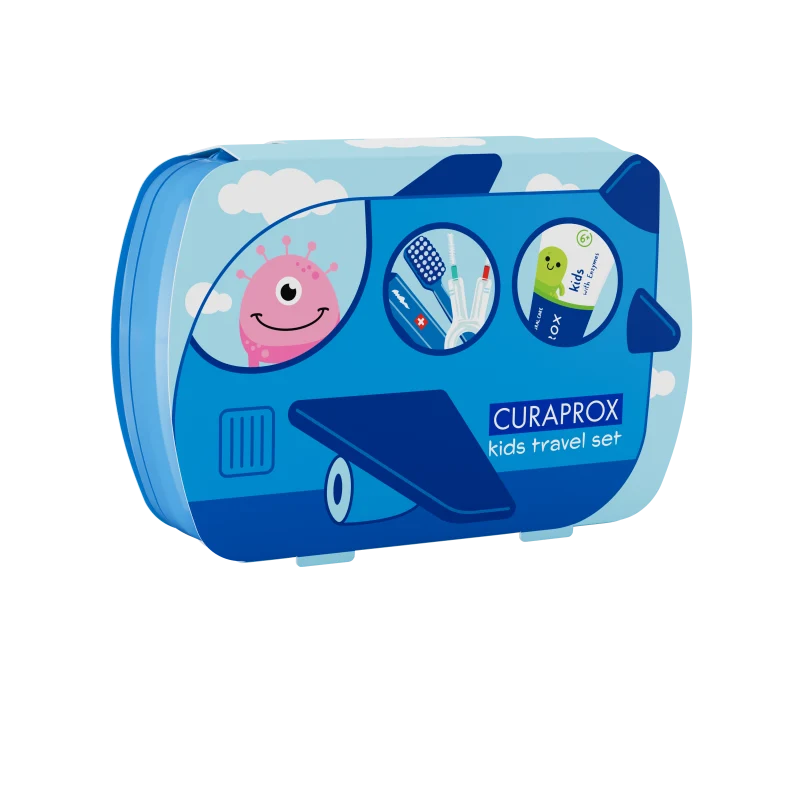
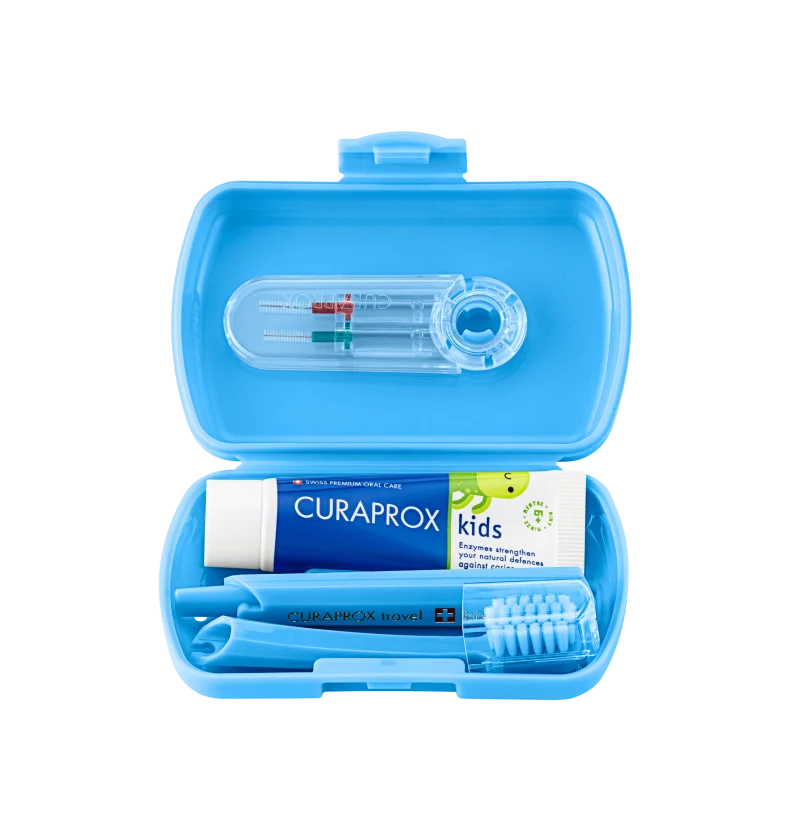
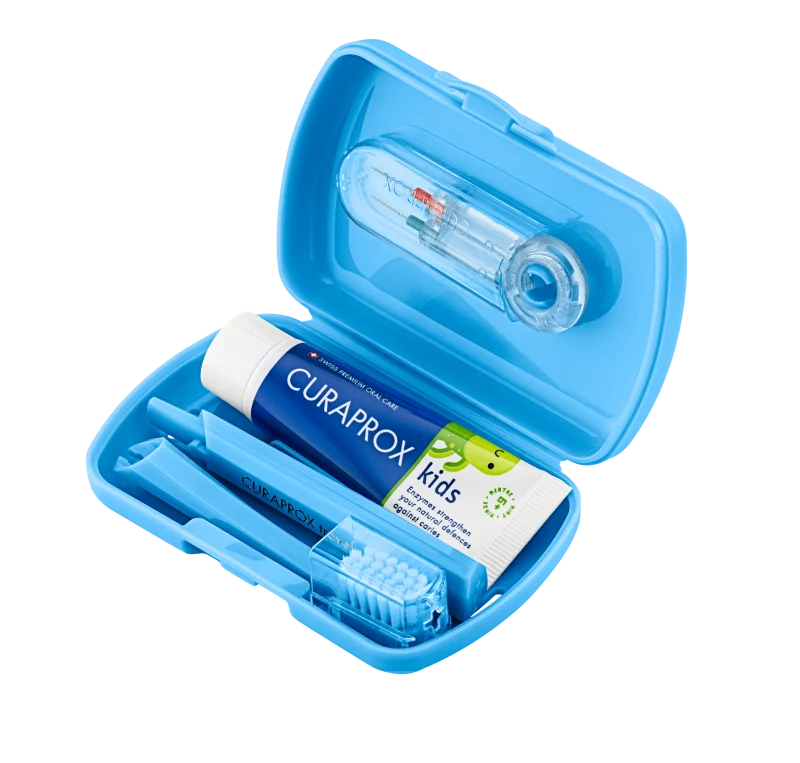
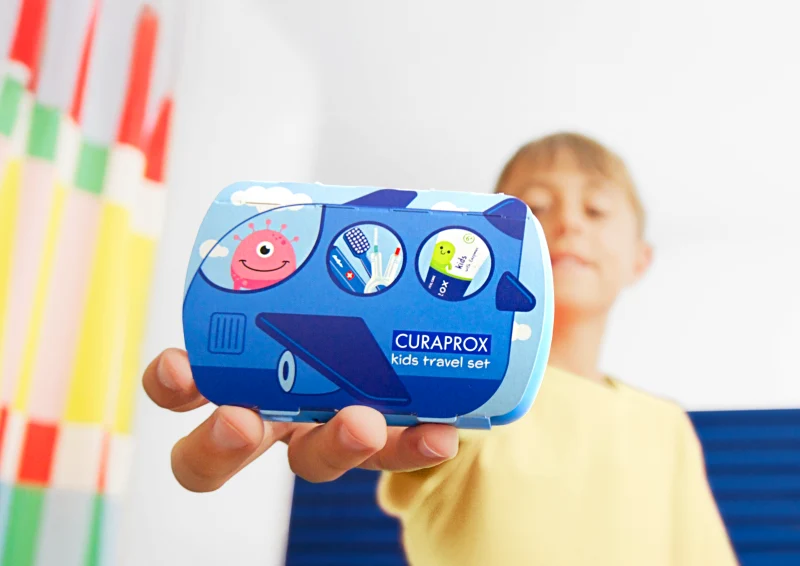
The Curaprox Kids Travel Set gives children aged 6 to 12 a complete oral-care routine in a durable, pocket-sized case. The refillable kit is suitable for holidays, school trips, sleepovers and busy days away from home, helping familiar brushing habits travel with them.
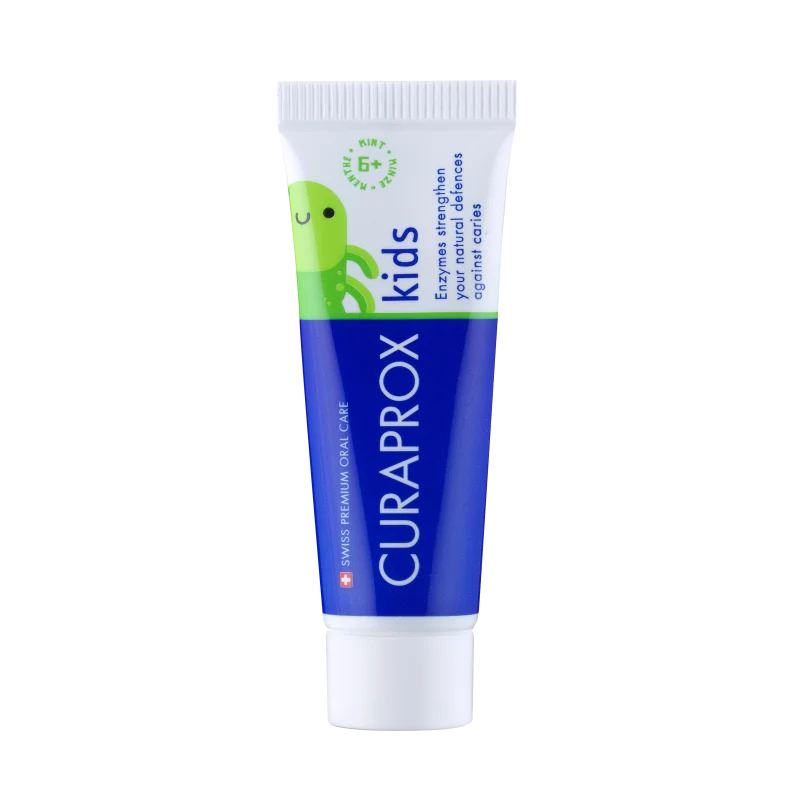
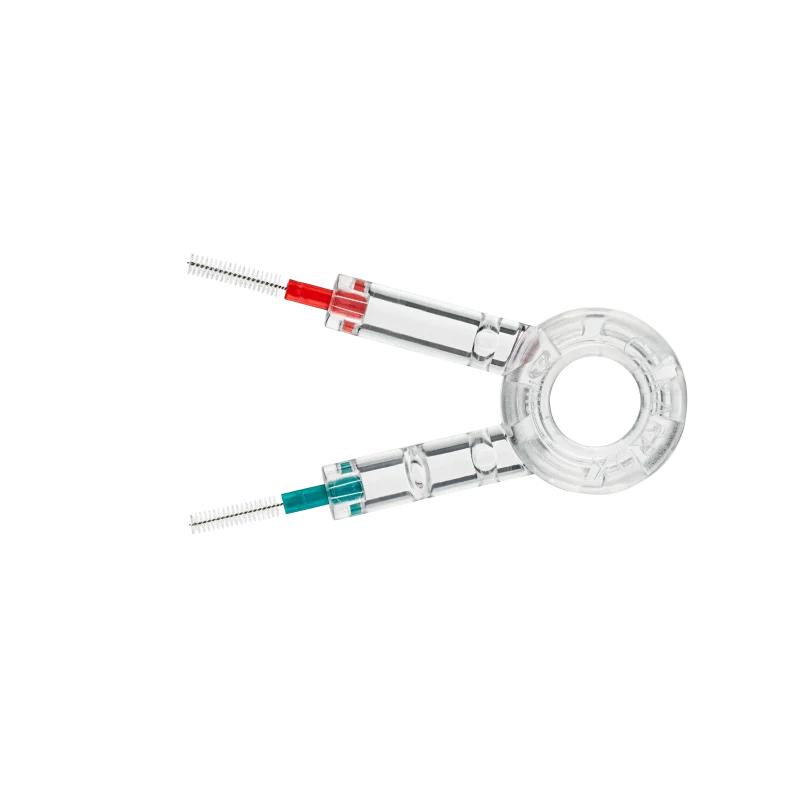
Inside is a travel-sized CS Kids toothbrush with 5,500 ultra-soft Curen® filaments, a 10 ml kids toothpaste and CPS prime interdental brushes in sizes 06 and 07 with a duo holder. Toothpaste flavour varies by set, while included stickers allow children to personalise the case. Brush heads, toothpaste and interdental brushes can each be replaced, extending the useful life of the compact kit.
Can one brush size fit all my teeth?
Most people need more than one brush size as interdental spaces normally are not the same size. You may need two or three sizes to clean all your interdental spaces properly. As Curaprox provides the only calibrating system in the market, dental professionals can easily help you finding the proper size for every space. We offer interdental brushes in various sizes and dimensions that address every need and space. If you are unsure about the proper sizes, don’t hesitate to ask the dentist of your trust which brushes are best for cleaning between teeth. If you want to give interdentals a try by yourself, opt for the CPS prime Mixed Start Set which includes all sizes.
Is the toothbrush in the Travel-Set the same size as a regular toothbrush?
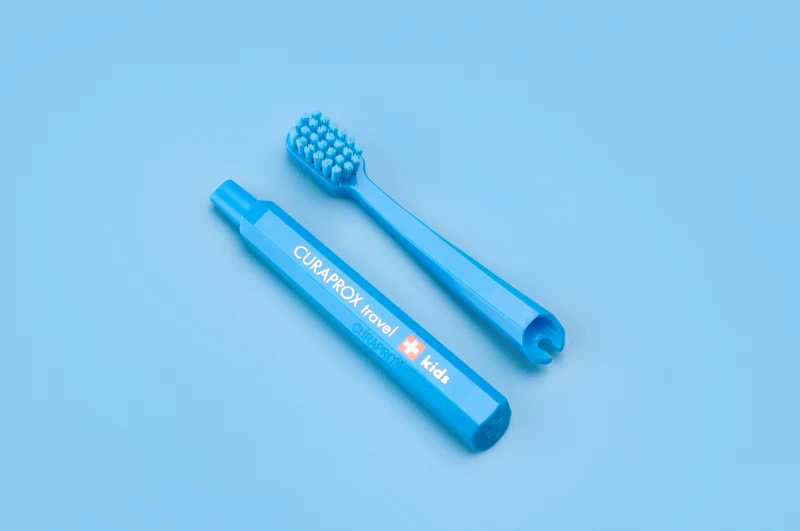
The toothbrush in the Curaprox Travel-Set is more compact than a traditional toothbrush and was specially designed for travelling. Thanks to its two-part design, it fits perfectly into the Travel-Set and helps your everyday oral care routine feel just as pleasant on the go as it does at home.
Can interdental brushes damage my gums?
If you use interdental brushes for the first time, it might be scary. But with the right size and the proper brushing technique, they are safe to use. And you will certainly feel the difference of a gentle and thorough clean. Curaprox interdental brushes are made with super-soft bristles and a flexible wire core that won't cause any damage to your gums. However, if you use interdental brushes that are too large or have very stiff bristles or a totally rigid core, there is a risk of damage. This means that the bristles can hurt your gums, and the wire can scratch your teeth and damage the enamel.
For 100% oral health
Recently viewed
Can one brush size fit all my teeth?
Most people need more than one brush size as interdental spaces normally are not the same size. You may need two or three sizes to clean all your interdental spaces properly. As Curaprox provides the only calibrating system in the market, dental professionals can easily help you finding the proper size for every space. We offer interdental brushes in various sizes and dimensions that address every need and space. If you are unsure about the proper sizes, don’t hesitate to ask the dentist of your trust which brushes are best for cleaning between teeth. If you want to give interdentals a try by yourself, opt for the CPS prime Mixed Start Set which includes all sizes.
Is the toothbrush in the Travel-Set the same size as a regular toothbrush?
The toothbrush in the Curaprox Travel-Set is more compact than a traditional toothbrush and was specially designed for travelling. Thanks to its two-part design, it fits perfectly into the Travel-Set and helps your everyday oral care routine feel just as pleasant on the go as it does at home.
Can interdental brushes damage my gums?
If you use interdental brushes for the first time, it might be scary. But with the right size and the proper brushing technique, they are safe to use. And you will certainly feel the difference of a gentle and thorough clean. Curaprox interdental brushes are made with super-soft bristles and a flexible wire core that won't cause any damage to your gums. However, if you use interdental brushes that are too large or have very stiff bristles or a totally rigid core, there is a risk of damage. This means that the bristles can hurt your gums, and the wire can scratch your teeth and damage the enamel.
Can I replace individual parts of my Travel-Set?
Yes. All key parts of the Curaprox Travel-Set can be replaced individually. Brush heads, interdental brushes and toothpaste are all available separately.
Which is better: Interdental brushes or floss?
You may wonder if floss or interdental brushes manage to clean your interdental spaces better. To effectively clean the spaces between your teeth, use interdental brushes as they have a major advantage over dental floss. Their flexible bristles span between teeth like an umbrella, fill the interdental space completely, and clean every nook and cranny. There is a size for every gap, even the narrowest. With a dental floss brush, on the other hand, you stretch the floss across these crevices, which means that it can therefore never clean as thoroughly as an interdental brush. However, dental floss is the clear winner when it comes to super-narrow spaces where interdental brushes can’t reach.
Are all Curaprox travel brush heads compatible with every Travel-Set?
Yes. All brush heads from the Curaprox Travel-Sets fit every Curaprox Travel-Set. You can therefore replace the brush head easily while continuing to use your existing handle and travel case.
Do I need to use interdental brushes every day?
Yes, daily use of interdentals should be a normal part of your oral care routine. It is best to use them in the evening, before hitting bed. Thanks to a between teeth brush, you go to bed with completely clean teeth and bacteria have less chance of building up colonies overnight, secreting harmful acids, and damaging your teeth or causing gum inflammation. However, the optimal timing for interdental cleaning should be decided together with your dental professional, based on your oral condition and individual needs.
How to brush my child’s teeth correctly?
Brushing should be a fun team effort. If your child is less than a year old, sit them on your lap with the back of their head resting against the crook of your arm or lay them on a changing table. You can also brush properly with them lying or sitting on the floor. Later, it is best if they stand in front of you with their head tilted back slightly, allowing you to see and reach all their teeth. Brush all teeth with small, gentle, circular movements—inner and outer sides as well as the chewing surfaces. Older children brush their teeth themselves, but we recommend that you supervise their brushing until the age of 10.
Can I replace the brush head instead of buying a new one?
Yes, that’s possible. We developed an environmentally friendly click system. With just one twist, you can replace the worn brush head of your interdental brush. Keep the handle, it can be reused many, many times. The interdental brushes refill packages are also made from recycled material—good for your teeth and our planet.
Interdental brushes vs floss
Interdental brushes do a really good job. Why? Their flexible bristles span between your teeth like a tiny umbrella and clean every nook and cranny. With a common dental floss brush, you can never reach these crevices, as the floss stretches across them and can’t reach all bacteria and plaque. But there are a few exceptions when floss is required to use: if you have extremely narrow gaps and interdentals won’t fit in, only flossing can clean your interdental spaces. Use it to complement your thorough cleaning on those specific spots as needed.
What flavours are available for kids?
Our toothpastes are made with only the good stuff such as enzymes, fluoride—one exception—, and Xylitol. They surely do not contain SLS, triclosan, and microplastics. We developed exciting flavours that are fun and make toothbrushing a pleasant experience. Let your child choose between fruity strawberry, juicy watermelon, or sweet mint.
Bad breath – could it be your tongue?
Bad breath is a taboo subject–and an embarrassing condition. However, the problem is more widespread than you might think. It is usually caused by a build-up of bacteria, which thrive on remnants of food between the teeth, in the gum pockets, and on the tongue. Did you know that roughly 60 percent of the bacteria can be found on the tongue? So, when it comes to oral hygiene, do not neglect this part of your mouth. Thanks to our special tongue scrapers you can ensure that your tongue stays nice and clean. Gently scrape the surface of your tongue three to four times a day and feel wonderfully fresh.
Which interdental brush size is right for me?
The right interdental brush glides gently between the teeth without pressure – and that’s exactly how it should feel. This helps remove plaque and bacteria thoroughly while staying gentle on your gums. If the brush is too small, it may not clean effectively enough. If it feels too tight or uncomfortable, it’s probably too large. With the right size, cleaning feels comfortable and effortless. Your dental professional will be happy to help you find the perfect CPS size for your smile.
Why do my gums bleed when using interdental brushes?
Bleeding gums are often a sign of inflammation caused by plaque between the teeth. With regular and gentle cleaning, gums and interdental spaces usually become healthier within just a few days and bleeding often decreases. If your gums remain sensitive or continue to bleed, we recommend contacting your dental professional.
Should I use interdental brushes before or after brushing?
Whether before or after brushing, what matters most is using them every day. This helps keep interdental spaces pleasantly clean and your gums healthy.
How long can I use an interdental brush?
Fresh filaments help provide a pleasant and thorough clean every day. That’s why we recommend replacing your interdental brush regularly.
Explore
kids, parents, baby & kids
.

babies, parents, baby & kids
When a baby is teething, it's a reason to be happy: after all, the baby's smile looks twice as sweet with the first teeth. However, teething can be quite painful for the baby - and can also put a strain on the parents' nerves.
In this article, you will learn everything you need to know about the topic: When do babies teethe? What symptoms can you expect when teething? What to do with fever and diarrhoea? And above all: What helps with teething?

parents, baby & kids, prevention
If a baby is born before the 37th week of pregnancy, it is referred to as a premature birth.
Why does this happen? What consequences can a premature birth have? What are the signs of an imminent premature birth? And are there ways to prevent it? In this article you will find everything you need to know about premature birth.