73327841_Packshot_Superduo_rosa

CS 5460 Ultra Soft & Interdental Duo Holder

Dhs. 34.65
Sale price  Dhs. 34.65 Regular price 
Skip to product information
73327841_Packshot_Superduo_rosa
Routine

CS 5460 Ultra Soft & Interdental Duo Holder

4.9 out of 5 (8 reviews)
Dhs. 34.65
Sale price  Dhs. 34.65 Regular price 
This convenient duo combines ultra-soft toothbrushing and interdental cleaning for comprehensive daily care.
  • Get it Thursday 27th August if you order within 13 hours
  • Free delivery on all orders

Description

The CS 5460 and Interdental Duo Holder set combines tooth-surface brushing with cleaning between teeth in one coordinated package. It helps customers address the areas reached by a manual toothbrush and the interdental spaces that require appropriately sized specialist brushes.

The CS 5460 uses 5,460 ultra-fine Curen® filaments, a compact angled head and an octagonal handle for gentle, controlled plaque removal. Two CPS prime brushes in sizes 07 and 09 attach to the dual-ended holder, allowing both sizes to remain ready for different gaps. Insert each interdental brush gently and use one in-and-out movement. Correct sizing is essential, so a dental professional should confirm that the included dimensions suit the customer's spaces.

  • Complete surface and gap care
  • CS 5460 toothbrush
  • 5,460 Curen® filaments
  • CPS 07 and 09 brushes
  • Dual-ended interdental holder
  • Professional sizing recommended
Specifications
Category
Toothbrush
Colour
Multicolor
Pack type
Set
Items per sales unit
2.0
Filament hardness
Ultra Soft
Exact colour name
magenta, pink, green, blue, orange
Material
Polypropylene
Age group
Adult
Application
Fresh Breath, Gum Issues, Sensitive Teeth, Daily care
Daily use
Yes
Brush head
Regular
Handle material
Polypropylene
Filament material
Curen®
Toothbrush type
Manual Toothbrush
Brush head cover
Yes
Number of filaments
5'460
Shipping Information
Free shipping for all orders. Orders are generally shipped the same day.

Everything you need to know

Why do soft bristles work?

Soft bristles have the clear advantage that they can individually embrace each tooth and clean it thoroughly. This allows them to reach areas that a hard toothbrush with rigid bristles can neither reach nor clean. In addition, our soft Curen® bristles are rounded at the top, protect the sensitive gums and do not scratch the enamel. With a soft toothbrush, there is no risk of damage or injury when brushing. 

Can interdental brushes damage my gums?

If you use interdental brushes for the first time, it might be scary. But with the right size and the proper brushing technique, they are safe to use. And you will certainly feel the difference of a gentle and thorough clean. Curaprox interdental brushes are made with super-soft bristles and a flexible wire core that won't cause any damage to your gums. However, if you use interdental brushes that are too large or have very stiff bristles or a totally rigid core, there is a risk of damage. This means that the bristles can hurt your gums, and the wire can scratch your teeth and damage the enamel.

How often and how long do I need to brush my teeth?

It is recommended to brush your teeth twice a day using a toothbrush with soft bristles and a gentle fluoride toothpaste. Remember to use also interdental brushes once a day—preferable before going to bed—to clean the gaps between your teeth. However, define the frequency and timing of interdental cleaning in accordance with your dental professional, adapted to your oral situation and individual needs. As for the recommended brushing time of at least two minutes each time: it is highly individual and certainly should not be limited to a fixed 2-minute rule. Please keep in mind that what matters most is that every surface of each tooth is thoroughly clean, which can take you longer than two minutes. So, you better focus on quality, not just on time. 

See all questions

Customer reviews

4.9 Based on 8 reviews
5 stars 0
4 stars 0
3 stars 0
2 stars 0
1 star 0

For 100% oral health

Recently viewed

Frequently asked questions

Why do soft bristles work?

Soft bristles have the clear advantage that they can individually embrace each tooth and clean it thoroughly. This allows them to reach areas that a hard toothbrush with rigid bristles can neither reach nor clean. In addition, our soft Curen® bristles are rounded at the top, protect the sensitive gums and do not scratch the enamel. With a soft toothbrush, there is no risk of damage or injury when brushing. 

Can interdental brushes damage my gums?

If you use interdental brushes for the first time, it might be scary. But with the right size and the proper brushing technique, they are safe to use. And you will certainly feel the difference of a gentle and thorough clean. Curaprox interdental brushes are made with super-soft bristles and a flexible wire core that won't cause any damage to your gums. However, if you use interdental brushes that are too large or have very stiff bristles or a totally rigid core, there is a risk of damage. This means that the bristles can hurt your gums, and the wire can scratch your teeth and damage the enamel.

How often and how long do I need to brush my teeth?

It is recommended to brush your teeth twice a day using a toothbrush with soft bristles and a gentle fluoride toothpaste. Remember to use also interdental brushes once a day—preferable before going to bed—to clean the gaps between your teeth. However, define the frequency and timing of interdental cleaning in accordance with your dental professional, adapted to your oral situation and individual needs. As for the recommended brushing time of at least two minutes each time: it is highly individual and certainly should not be limited to a fixed 2-minute rule. Please keep in mind that what matters most is that every surface of each tooth is thoroughly clean, which can take you longer than two minutes. So, you better focus on quality, not just on time. 

How often to change manual toothbrush?

Replace your manual toothbrush every three to four months, even sooner if the bristles look worn or frayed. Regular replacing ensures the toothbrush remains effective at removing plaque and prevents the buildup of bacteria. Frayed bristles become less effective at cleaning teeth and removing plaque. Also replace your brush after recovering from a cold or flu, as bacteria can linger on the bristles and accumulate, especially in the moist environment of a bathroom. This may lead to reinfection or other oral health issues. 

Why do my gums bleed when using interdental brushes?

Bleeding gums are often a sign of inflammation caused by plaque between the teeth. With regular and gentle cleaning, gums and interdental spaces usually become healthier within just a few days and bleeding often decreases. If your gums remain sensitive or continue to bleed, we recommend contacting your dental professional.

Explore

Cleaning interdental spaces correctly

Cleaning interdental spaces correctly

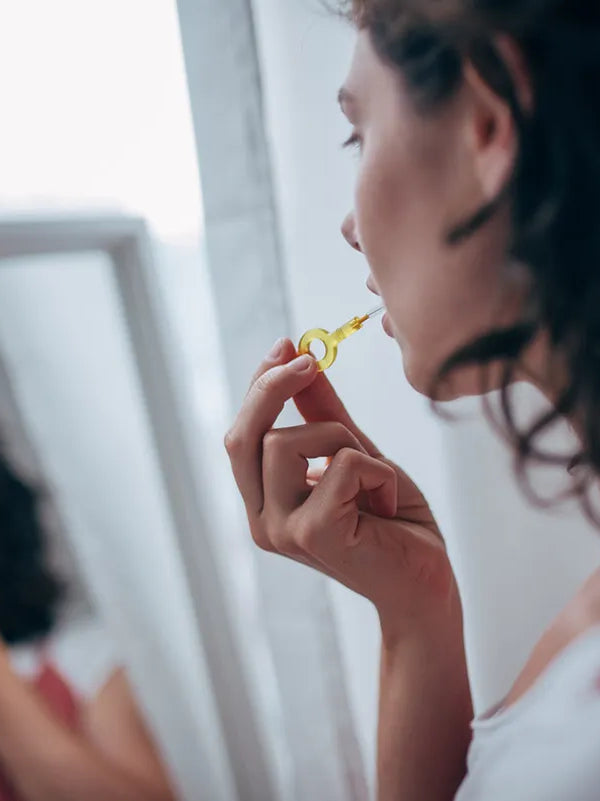
Cleaning your teeth? – Of course! Fortunately, it is part of most people's daily routine. But be honest: How much attention do you pay to the spaces between your teeth? Do you really clean them sufficiently?

You definitely should do, as cavity-causing bacteria love to colonise these areas of your mouth. Further, they are impossible to reach with a normal toothbrush. Plaque can also feel right at home in these spaces. To clean interdental spaces correctly, you need to use interdental brushes. Discover how to use them properly here. 
Was tun gegen Zahnfleischentzündung?

How to combat gingivitis!

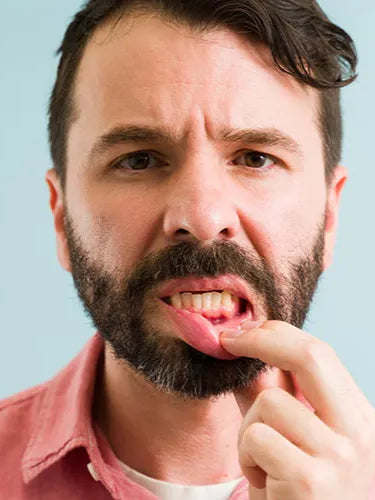
Detecting red marks after biting into a succulent apple may give you quite a fright: Your gums are bleeding. This is often the first sign of gum disease, also known as gingivitis.

Discover everything you need to know in this article about what gingivitis is exactly, how you can treat it and why you should never take it lightly.

Schlechter Atem? So wirst du Mundgeruch los

Bad breath? How to get rid of bad breath

Bad breath is a taboo subject – and an embarrassing condition. Since many sufferers are not even aware of their bad breath, but others can smell it immediately. Talking about it is something few people dare to do. However, the problem is more widespread than you might think and nothing to be ashamed of: Around 25 percent of the world's population are sufferers.

Reason enough to be open and honest about it. We have therefore set out some key facts about the subject below. Discover how to test if you have bad breath, what causes bad breath and when is it classified as pathological halitosis. Further, we offer you some useful tips on how to maintain a fresh breath.